
St. Augustine Lawn Care Program – Southlake, TX
Designed by Aaron Shehan, Practical Agronomist &
Author of
The North Texas Lawn Playbook—
Built for Shade, Disease Pressure & High-pH Soils
9 Applications Per Year | Built Specifically for Southlake’s High-pH Clay Soils & High Disease Pressure
St. Augustine is one of the best-looking grasses in Southlake—but it is also one of the easiest to damage when treated incorrectly.
Most St. Augustine lawn problems here come down to shade, high-pH clay soil, moisture, disease pressure, and programs that treat St. Augustine like Bermuda.
Gro Lawn does not do that.
Our 9-round St. Augustine program is built around soil data, seasonal timing, disease pressure, shade, moisture, and turf condition—not a rigid calendar or one-size-fits-all treatment plan.
St. Augustine Thrives Here—If It’s Managed Correctly
St. Augustine can perform beautifully in Southlake when it is managed correctly.
It declines quickly when it is overfed, mistimed, watered incorrectly, or treated like Bermuda with a one-size-fits-all program.
Gro Lawn’s St. Augustine program is built around soil-temperature timing, controlled nutrition, shade and moisture awareness, and built-in disease protection—not calendar-based guesswork.
The goal is to protect the lawn first, support steady recovery, and avoid pushing growth when conditions make disease more likely.
Lawn Care in Southlake Isn’t One-Size-Fits-All
Every St. Augustine lawn in Southlake is dealing with a challenging combination of high-pH clay soil, shade, moisture, heat, and seasonal disease pressure.
That is why generic lawn programs often fail St. Augustine even faster than they fail Bermuda.
St. Augustine needs a different strategy: conservative nutrition, disease-aware timing, proper mowing, moisture management, and decisions based on the condition of the lawn—not a one-size-fits-all schedule.
This program is built specifically for how St. Augustine behaves in North Texas, so your lawn is protected, stabilized, and supported throughout the season.
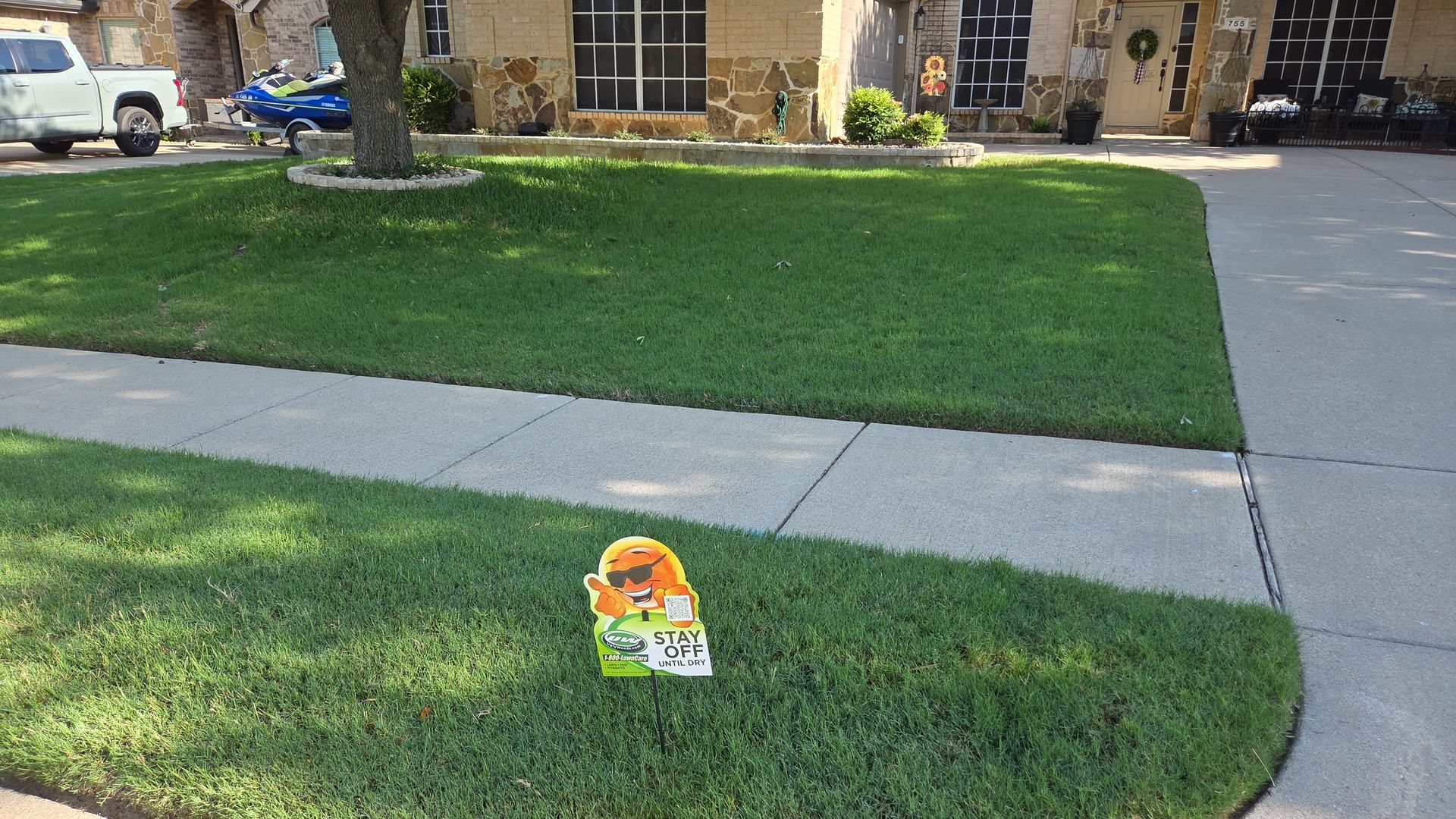
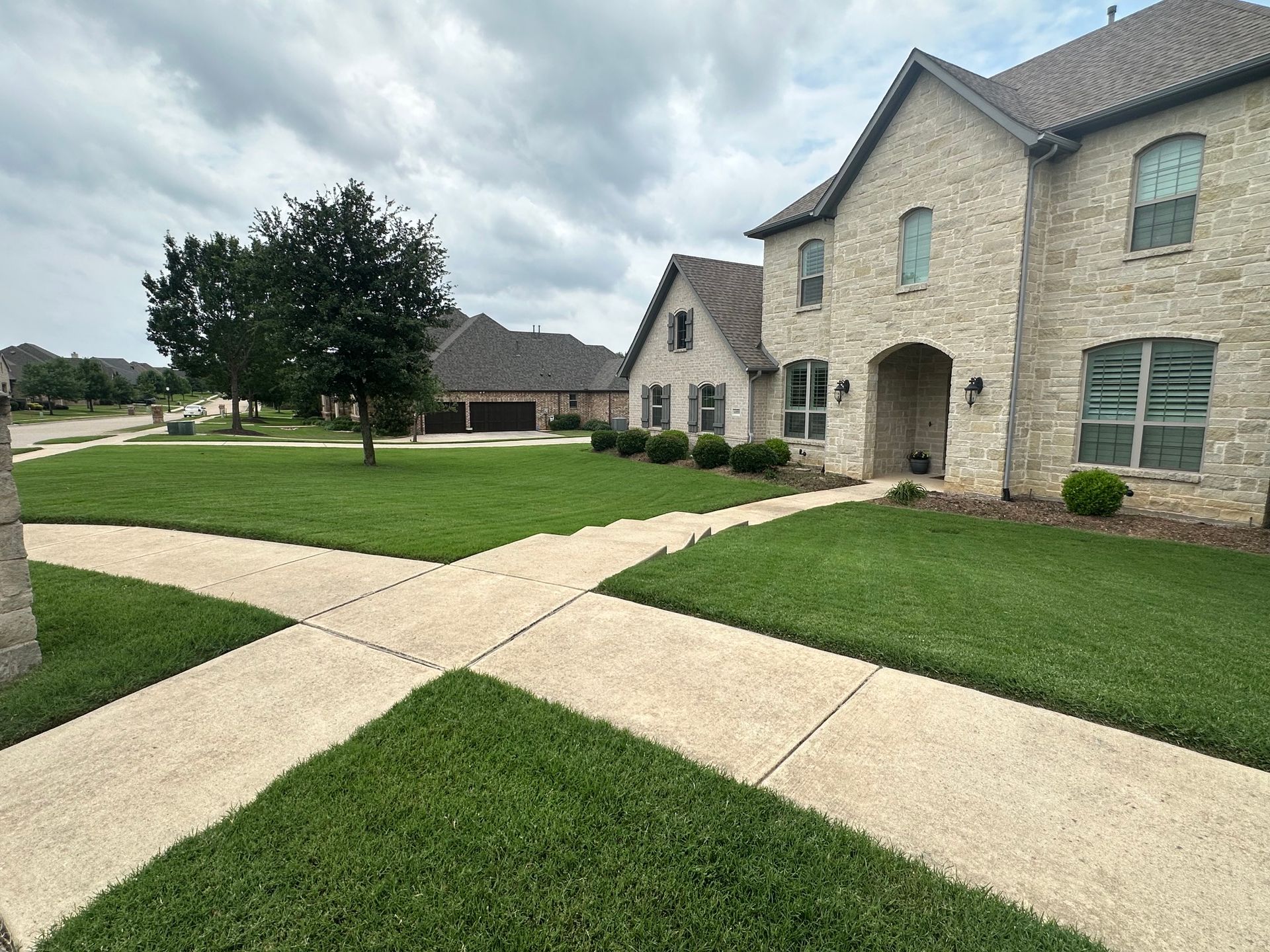
Things to Know About St. Augustine in Southlake
- December through March is typically dormancy, so no growth should be pushed.
- St. Augustine responds to soil temperature, moisture, shade, and disease pressure—not calendar dates alone.
- Southlake’s high-pH clay soils can restrict nutrient availability.
- Excess nitrogen can increase disease risk and accelerate decline.
- Disease pressure follows predictable seasonal patterns, especially in shaded or moisture-prone areas.
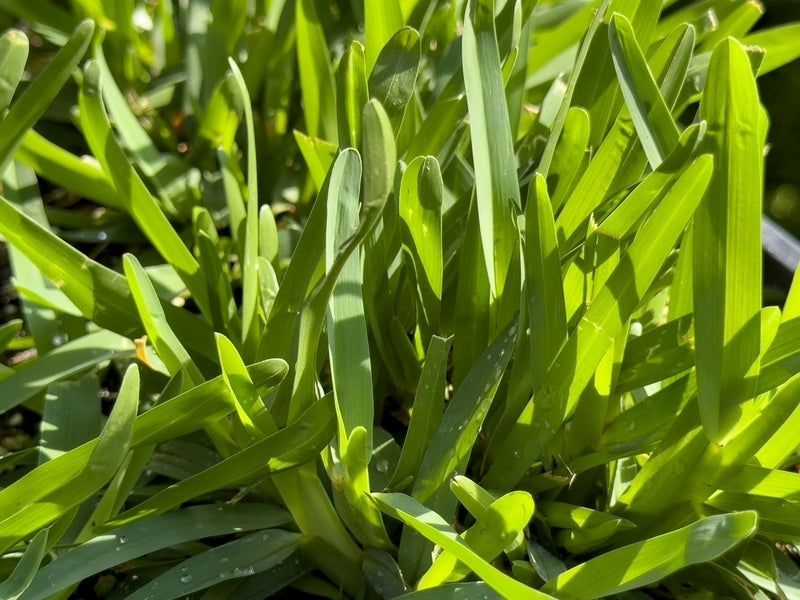
This program is designed to protect and stabilize St. Augustine first, then support steady growth when conditions are right.
What to Do Before Your Lawn Wakes Up in Spring
Early spring success does not come from pushing fertilizer too soon.
It comes from proper preparation before St. Augustine becomes fully active.
Before the growing season begins, St. Augustine lawns should be cleaned up, opened up, and evaluated for debris, matted stolons, trapped moisture, shade issues, and early disease pressure.
Proper spring preparation helps improve airflow, reduce moisture problems, warm the soil more evenly, and set the lawn up for a stronger, more stable growing season.
This is the same preparation approach we use to reduce early-season disease pressure and set St. Augustine lawns up for a stronger, more stable growing season.
How Our 9-Round St. Augustine Program Works
Gro Lawn’s 9-round St. Augustine program is built around protection first.
Each application is timed around the way St. Augustine actually behaves in Southlake: soil temperature, shade, moisture, disease pressure, seasonal weed pressure, and turf condition.
Some rounds focus on weed prevention. Some focus on disease suppression. Some include conservative nutrition only when the lawn can use it safely.
We do not treat St. Augustine like Bermuda, and we do not force the same products at every visit.
Special Spring Program for New Customers
Starting in spring? We do it right from day one.
Your first application includes both:
- Pre-emergent weed control
- Post-emergent weed control
We target:
- Broadleaf weeds
- Annual bluegrass
- Rescue grass
Spring-start customers are not overloaded with rushed applications just to catch up to a preset schedule.
Instead, treatments are spaced properly to protect the lawn, maintain product effectiveness, and avoid pushing St. Augustine too hard too early.
Why St. Augustine Lawns in Southlake Perform Better with Gro Lawn
Most lawn programs focus on visits. We focus on protection, timing, and results.
- Conservative nitrogen strategy to reduce disease risk
- Soil-driven care—not a one-size-fits-all program
- Condition-based applications adjusted to the lawn
- Built-in disease control, not treated as an afterthought
- Potassium and micronutrients for stress tolerance and recovery
- Elemental sulfur for long-term soil correction
- Designed by Aaron Shehan with 30+ years of North Texas experience
What No One Else Tells You About St. Augustine Lawns
Some St. Augustine problems cannot be fixed with treatments alone.
These include:
- Too much shade
- Poor drainage or overwatering
- Chronic disease pressure
- Compacted soil
- High-pH clay soil conditions
In these situations, correction may be needed—not just another lawn application.